
Why I'm Writing This (And What Nobody Tells You)
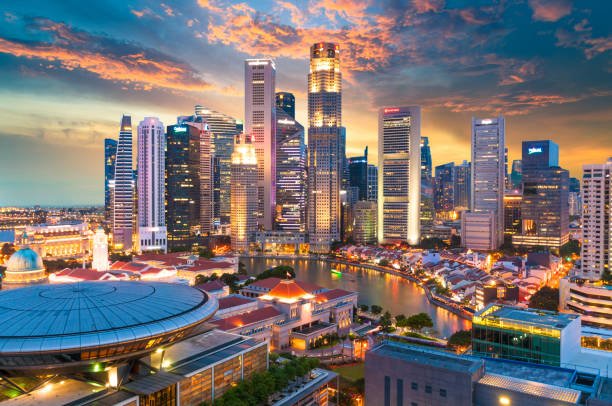
Let me start with a confession: when I first thought about studying in Singapore, my knowledge came mostly from images of futuristic skylines and hawker centers. I imagined efficient everything, incredible food, and a culture that blends East and West. And while some of that turned out to be true, there was so much I wish someone had told me before I made the leap.
My friend Wei moved to Singapore for his master's in business at the National University of Singapore (NUS) back in 2019. I remember him video calling me during his first week, completely overwhelmed. "Emma," he said, "I'm studying at one of the best universities in Asia, the city is incredibly efficient, and I have no idea how to handle this heat and humidity." Fast forward four years, and Wei is now working at a multinational company in Singapore, completely adapted to the climate, and loving his life there.
Then there's my colleague Priya, who did her PhD at Nanyang Technological University (NTU). She'll tell you that the research opportunities were incredible, but the cost of living was eye-watering. "Singapore is amazing," she told me over coffee last month, "but it's also one of the most expensive cities in the world. I was spending more than half my income on rent alone."
These stories, plus countless others from students I've advised, have taught me that Singapore isn't just about futuristic buildings and efficient transportation. It's a serious academic destination with its own set of challenges and rewards. Let me share what I've learned—the incredible, the challenging, and everything in between. If you're just starting your study abroad journey, you might find our guide on best countries for beginners helpful.
The Good Stuff: Why Students Love Singapore
1. The Quality of Education is World-Class
I know what you're thinking: "Singapore? Isn't that just for people who want to work in Asia?" Let me correct that misconception right now. Singapore universities consistently rank among the best in Asia and globally, and it's not just about modern campuses.
Wei, the business student, was blown away by the quality of his program. "The professors were world-renowned researchers and industry leaders," he told me. "The curriculum was cutting-edge, and the emphasis on practical application was exactly what I needed. I wasn't just learning theory—I was applying it to real-world business problems."
And it's not just business. I've had friends study engineering at NTU, medicine at NUS, and computer science at Singapore Management University. The common thread? They all felt challenged, supported, and prepared for the real world.
2. The Strategic Location is Perfect
Let's talk about Singapore's location. It's in the heart of Southeast Asia, which means you have incredible access to the region's growth markets. This isn't just about tourism—it's about career opportunities.
Wei took full advantage of this. During his master's, he did internships in Malaysia, Indonesia, and Thailand. "Those experiences were invaluable," he told me. "I gained regional expertise, built a network across Southeast Asia, and landed my current job because of my understanding of the region."
And it's not just about internships. Being in Singapore means you're close to other major Asian hubs—Hong Kong, Shanghai, Tokyo. Conferences, networking events, business trips—they're all accessible.
3. The Multicultural Environment is Welcoming
Here's something that often surprises international students: Singapore is incredibly multicultural. You'll find communities from all over Asia and beyond, which means you'll feel welcome regardless of your background. If you're concerned about language requirements, our guide on studying without IELTS covers alternatives for many countries.
Wei's cohort was incredibly diverse. "I had classmates from China, India, Malaysia, Indonesia, Vietnam, and of course, Singapore," he told me. "We learned so much from each other—not just about business, but about different cultures and perspectives. Those connections have been invaluable in my career."
And it's not just in universities. Walk through Singapore, and you'll hear dozens of languages, find restaurants serving cuisine from every corner of Asia, and meet people from all backgrounds. It's a truly international environment.
4. The Efficiency and Safety Are Unmatched
Let's talk about Singapore efficiency. I'm talking about public transportation that runs like clockwork, a city that's incredibly clean, and a society that values order above almost everything else.
Wei told me about his daily routine: "I'd wake up, take the MRT (subway) to university, and arrive exactly when I planned. Every single time. The efficiency is incredible. You can plan your life with a level of precision that's just not possible elsewhere."
And the safety? It's unparalleled. Singapore is consistently ranked as one of the safest cities in the world. You can walk alone at night, leave your belongings unattended in cafes, and feel completely secure. It's a level of safety that many international students find incredibly liberating.
The Not-So-Good Stuff: Challenges You Need to Know About
1. The Cost of Living is Astronomical
Let's be honest: Singapore is expensive. International student tuition can range from $20,000 to $50,000 SGD per year, depending on the university and program. And that's before you factor in living costs. For a detailed breakdown of study abroad costs, check out our guide on understanding true costs beyond tuition.
Priya, the PhD student, was paying $2,500 SGD per month for a small studio apartment. "I was spending over half my stipend on rent," she told me. "I learned to budget carefully, cook at home, and take advantage of student discounts. But it was stressful—there were months when I barely had enough money for groceries."
And it's not just rent. Groceries, transportation, entertainment—everything adds up. If you're on a tight budget, Singapore will be challenging. You might want to consider universities in other Asian cities where costs are more reasonable.
2. The Climate is Challenging
Let's talk about Singapore weather. It's hot. And humid. Like, really hot and really humid. If you're from a temperate climate, this will be a significant adjustment.
Wei, who's originally from Beijing, struggled with this. "I'm used to four distinct seasons," he told me. "Singapore is hot and humid year-round. My first few months were miserable—I was constantly sweating, constantly tired, and constantly uncomfortable."
But here's the thing: you adapt. You learn to dress appropriately, you invest in air conditioning, and you find ways to stay cool. And when you do venture outside? The tropical environment is actually beautiful—lush greenery, incredible beaches, and a lifestyle that's centered around being outdoors.
3. The Work Culture Can Be Demanding
Here's something that often surprises international students: Singapore work culture is intense. Long hours, high expectations, and a strong emphasis on productivity are the norm.
Priya told me about her experience as a PhD student: "I was expected to be in the lab from morning until evening, six days a week," she said. "There was this unspoken pressure to work harder, longer, more than everyone else. It was exhausting."
And it's not just about hours—it's about hierarchy and respect for authority. There's a strong emphasis on following rules and not challenging established norms. If you're someone who values work-life balance and creative freedom, this can be challenging.
My Advice: Is Singapore Right for You?
Choose Singapore If:
- You're interested in business or technology: Singapore is a global hub for these fields, and the universities reflect this. If you're studying business, finance, engineering, or related fields, you'll find incredible opportunities.
- You value efficiency and safety: Singaporean society is organized, punctual, and incredibly safe. If you appreciate these qualities, you'll feel right at home.
- You're interested in Asian markets: Singapore's strategic location gives you incredible access to Southeast Asia's growth markets. If you're interested in working in the region, Singapore is the perfect base.
- You're comfortable with multicultural environments: Singapore is incredibly diverse, with communities from all over Asia and beyond. If you thrive in multicultural settings, you'll love it.
Think Twice About Singapore If:
- You're on a tight budget: Singapore is one of the most expensive cities in the world for international students. If cost is a major concern, you might want to consider more affordable options.
- You hate hot and humid weather: Singapore is hot and humid year-round. If you need distinct seasons and cooler temperatures to be happy, Singapore's climate might be challenging.
- You value work-life balance above all else: Singaporean work and academic culture can be demanding, with long hours and high expectations for productivity. If you prioritize work-life balance, you might find it stressful.
Practical Tips from Those Who've Been There
From Wei (Business, NUS):
"Take advantage of the strategic location. Do internships in neighboring countries, attend regional conferences, and build a network across Southeast Asia. That regional expertise will be invaluable in your career."
From Priya (PhD, NTU):
"Budget carefully, especially for housing. Look for shared apartments or university housing—they're often more affordable. And take advantage of student discounts for food, transportation, and entertainment."
From Michael (Engineering, SMU):
"Invest in good air conditioning. Seriously. The heat and humidity are no joke. Having a comfortable living and study space will make a huge difference in your quality of life."
From Sarah (Medicine, NUS):
"Join international student organizations. They're a great way to make friends who understand what you're going through. Don't try to navigate everything alone."
Final Thoughts: Is Singapore Worth It?
After watching friends and students navigate the Singaporean education system, my answer is a qualified yes. Singapore isn't perfect—the cost of living is astronomical, the climate is challenging, and the work culture can be demanding. But for the right person, it offers an education that's both academically excellent and strategically valuable.
Wei put it perfectly when we talked last week: "Singapore gave me access to Asia's growth markets, a world-class education, and a network that spans the region. Was it expensive? Yes. Was it hot? Absolutely. But would I do it again? In a heartbeat."
If you're considering Singapore, do your research. Talk to current students, reach out to alumni, and be honest with yourself about what you want from your study abroad experience. And if you decide to take the leap? Pack your air conditioning, your budgeting skills, and get ready for an adventure that will challenge you, inspire you, and change you in ways you never expected.
Frequently Asked Questions
1. Do I really need to learn a local language to study in Singapore?
Not at all. English is one of Singapore's official languages and is the primary language of instruction at universities. You'll be completely fine with English. However, you might pick up some Singlish (Singaporean English) and basic phrases in Malay, Mandarin, or Tamil naturally—that's part of the fun!
2. Can I work while studying in Singapore?
Yes! International students can work up to 16 hours per week during the semester and full-time during breaks. Many students find part-time work in tutoring, research positions, or service jobs. Just make sure your visa allows it—most student visas do.
3. How hard is it to get a job after graduation?
Singapore has a strong job market, especially in business, finance, and technology fields. The strategic location gives you access to Southeast Asia's growth markets, which is a huge advantage. However, competition can be intense, and having relevant experience and a strong network can make a big difference. If you're interested in comparing visa processes across countries, our article on easier visa processes might be helpful.
4. Is Singapore really as expensive as people say?
Unfortunately, yes. Singapore is one of the most expensive cities in the world for international students. Tuition is high, and living costs—especially rent—are significant. However, many universities offer scholarships, and shared accommodation can help reduce costs.
5. What's the biggest mistake international students make in Singapore?
In my experience, the biggest mistake is underestimating the cost of living. Many students arrive thinking they can manage on a certain budget, only to realize that rent, food, and other expenses are much higher than expected. Budget carefully, look for affordable housing options, and take advantage of student discounts.